
.jpeg)
Click to view
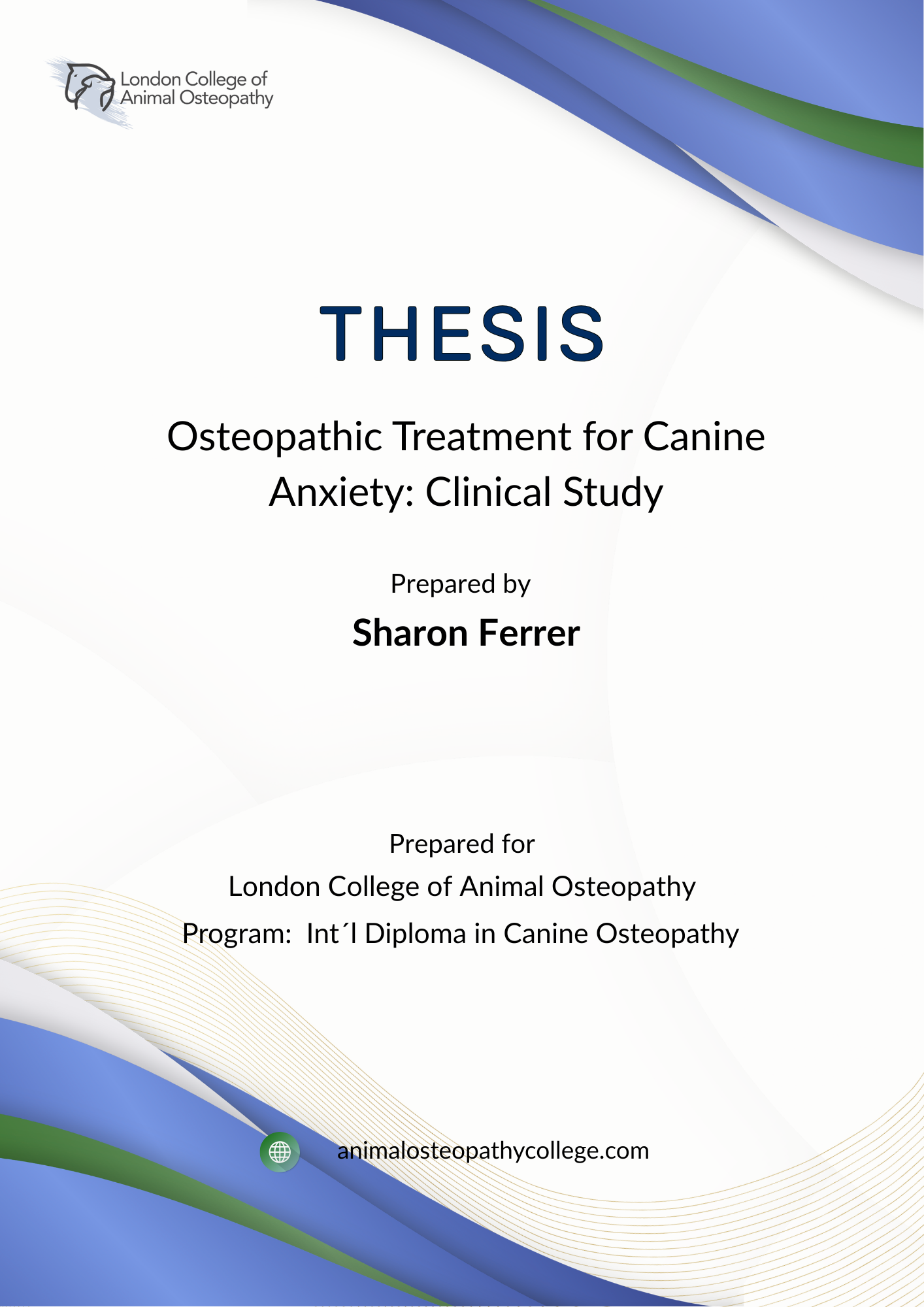
Anxiety in dogs is far more than a behavioural inconvenience. It is a physiological state — one that plays out in the muscles, the nervous system, and the hormonal cascade of the HPA axis. And yet, treatment approaches in veterinary practice have remained stubbornly narrow, leaning heavily on medication and conditioning-based interventions, with limited success in persistent or generalised cases. This thesis by Sharon Ferrer Tresaco takes a different angle. Drawing on a systematic review of published research, it asks whether osteopathic manual therapy could offer a meaningful contribution to canine anxiety management — not as a standalone solution, but as part of a genuinely integrated approach. The research begins by mapping the physiological territory: how the HPA axis governs the stress response, how sustained activation dysregulates cortisol levels, and how that hormonal turbulence eventually manifests in the behavioural symptoms that owners and practitioners observe. Muscle tension, hypervigilance, separation distress, and compulsive behaviour are not simply problems of training or socialisation — they are expressions of a body under chronic load. From there, the thesis explores how osteopathic techniques — particularly high velocity low amplitude manipulation, sacral and suboccipital decompression, and diaphragmatic pressure — appear to influence autonomic nervous system tone. Studies in both humans and horses suggest that these techniques can shift the balance toward parasympathetic dominance, evidenced by measurable changes in heart rate variability. The vagus nerve, and its proximity to key osteopathic treatment sites, emerges as a central player. The limits of current evidence are acknowledged honestly — much of the relevant research involves small samples or non-canine populations, and the field lacks the rigorous controlled trials needed to draw firm conclusions. But the patterns are consistent enough to be compelling. Read the full thesis to follow the physiological argument and understand why the author believes canine anxiety treatment may be ready for a broader, body-led conversation.








.png)
.png)
