
Click to view
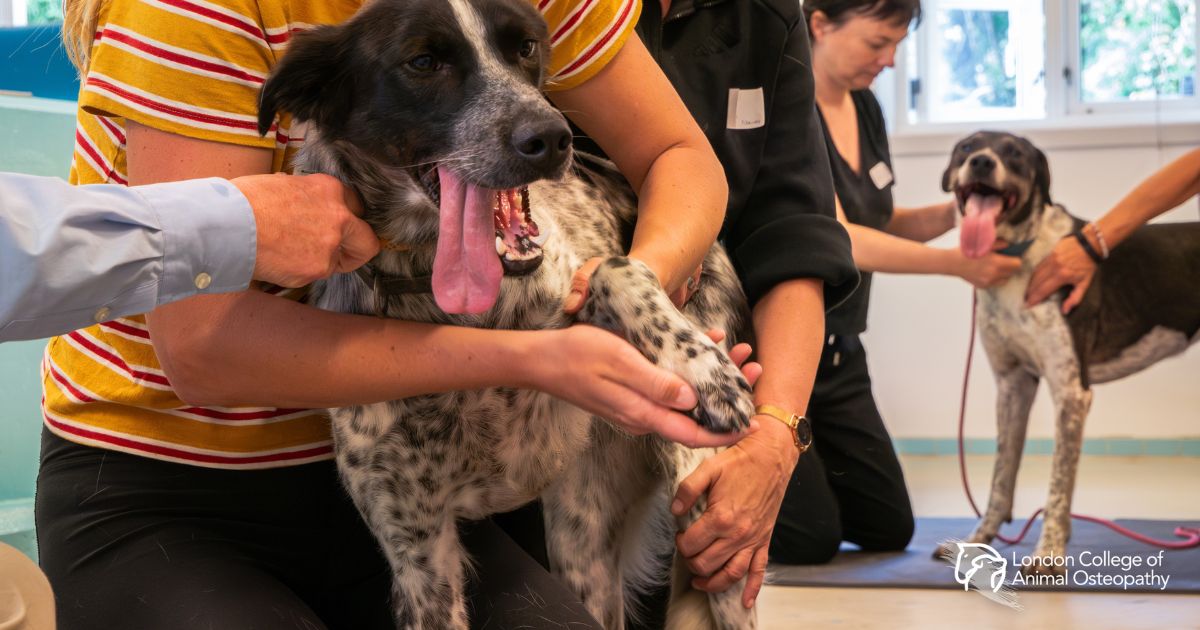
Osteoarthritis affects up to 75% of adult medium- and large-breed dogs, and its prevalence has risen sharply over the past decade. Conventional management — ranging from NSAIDs to weight control — addresses symptoms but rarely targets the underlying structural and fascial dynamics driving the disease. In this thesis, Carlotta Donati examines the scientific basis for applying osteopathic fascial treatment to canine osteoarthritis, drawing on emerging research on how the fascial system contributes to joint degeneration, pain, and systemic compensation. Fascia — the three-dimensional connective web surrounding every structure in the body — plays a far greater role in OA than is commonly recognised. When a joint becomes inflamed or restricted, the fascial tension it generates does not remain local. The dog begins to shift weight, alter its gait, and recruit compensatory patterns throughout its myofascial network. These shifts, mapped along seven kinetic fascial lines that mirror those identified in human osteopathic anatomy, become self-perpetuating sources of dysfunction that extend well beyond the original joint. Donati explores both direct and indirect fascial techniques, detailing how manual intervention modulates the autonomic nervous system, reduces intrafascial tension, and stimulates new collagen deposition — effects that extend beyond simple pain relief to address the mechanical and neurological environment of the diseased joint. The conclusion is not that fascial osteopathy replaces conventional veterinary care, but that the two work in productive synergy: one manages pathology, the other restores the structural conditions in which healing can occur. For practitioners working with arthritic dogs, this thesis offers a clinically grounded rationale for integrating fascial treatment into their approach.











.png)
.png)
