
Click to view
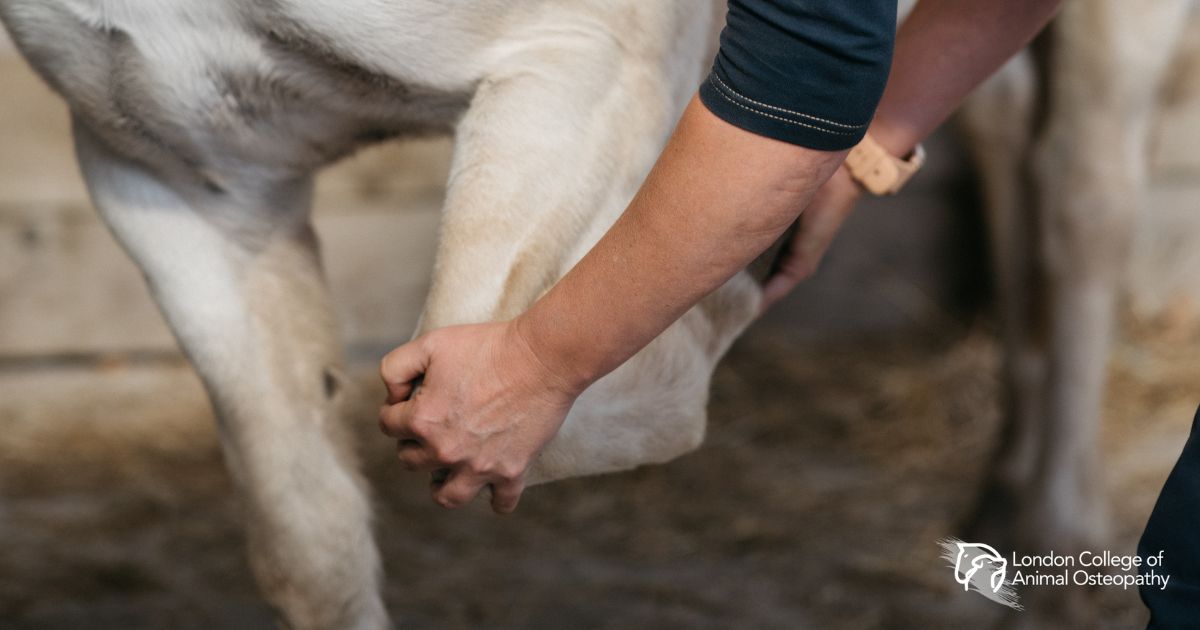
Hippocrates observed that healing is a matter of time. But for the modern horse owner, time is a luxury complicated by livery costs, competition schedules and the very real risk that prolonged immobility creates its own cascade of secondary problems. This thesis by Helen Reynolds tackles that tension head-on, examining whether osteopathic manual techniques can meaningfully improve outcomes in one of the most common and consequential areas of equine injury — the distal limb. The distal limb is a remarkable structure: lightweight, heavily loaded and almost entirely reliant on tendons, ligaments and small joints rather than bulk musculature. It bears forces of up to 2.5 times body weight at the gallop. The superficial digital flexor tendon, the suspensory ligament, the small bones of the pastern and coffin joint — these structures are routinely stressed to their limits in both competition and leisure horses, and when they fail, the consequences can be career-ending. Reynolds argues that the standard veterinary approach of box rest and anti-inflammatories, while medically necessary, leaves a significant gap. Immobility reduces blood and lymph flow to tissues that already have poor vascular supply. Collagen lays down haphazardly, scar tissue forms with less elasticity than the original tendon, and the horse returns to work with reduced range of motion and increased risk of re-injury. A study cited in the thesis found a 20% reduction in fetlock range of motion after seven weeks of cast immobilisation, even with subsequent rehabilitation exercise. This is where osteopathic manual techniques step in. Reynolds draws on joint mobilisation research, soft tissue techniques and the work of Professor Stuart McGregor to show that graduated movement, applied thoughtfully, supports the healing cascade at each stage — from acute inflammation through proliferation to remodelling. The case for OMT here is not that it replaces veterinary medicine, but that without it, horses may never fully recover what they lost.





.jpg)





.png)


.png)
.png)
