
Click to view
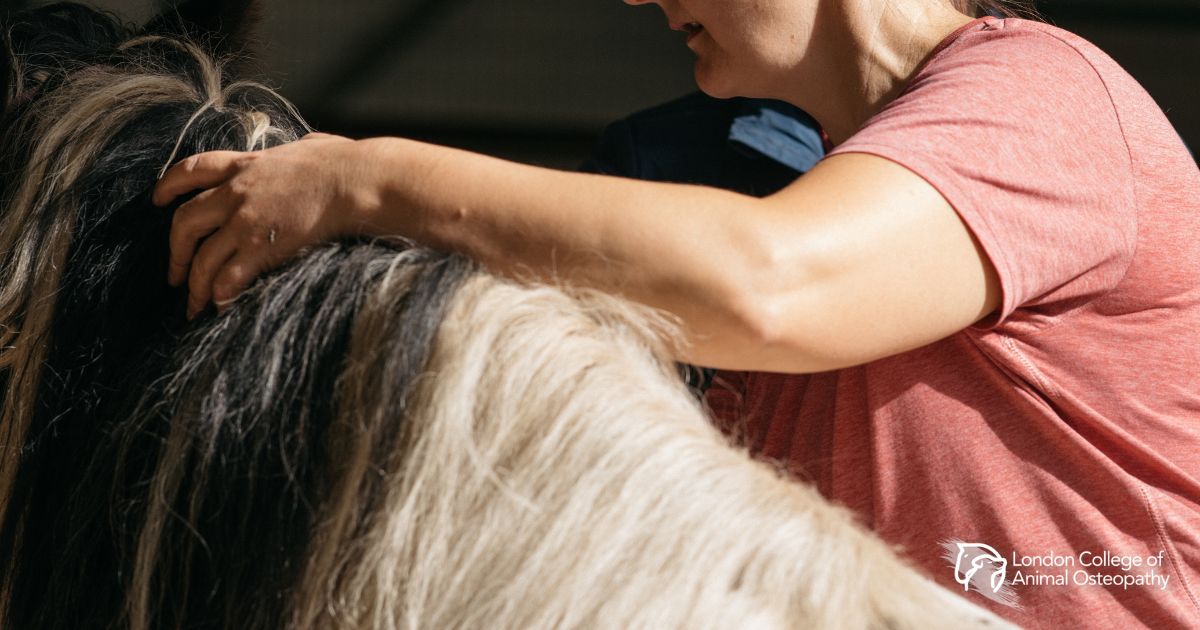
Exertional rhabdomyolysis — commonly known as tying-up — is a painful and often career-limiting condition in horses, characterised by sudden muscle damage, elevated enzyme markers, and in severe cases, kidney involvement. Despite its prevalence in performance horses, the role of osteopathic manual therapy in supporting recovery from this condition has received little formal attention. This case study by Bethany Pestell explores that gap. The subject is Bugsy, a 14hh cob-type gelding who experienced three episodes of exertional rhabdomyolysis within 13 months—an unusual pattern given his breed, moderate workload, and stable management. Osteopathic support began eighteen days after his third episode, once blood enzyme levels had returned to near-normal range, and continued across four months of graduated rehabilitation. Initial assessment findings included significant muscle tension across the quarters and lumbar area, coupled with restricted movement in both hindlimbs. This was accompanied by a compensatory overdevelopment of the forehand. The treatment strategy employed a combination of functional technique, myofascial release, osteopathic articular balancing (OAB), and high-velocity low-amplitude (HVLA) manipulation. Each modality was carefully selected to target specific restrictions and avoid placing undue stress on the already compromised tissues. Significant progress was observed over three focused sessions. By the final visit, Bugsy was fully capable of work, exhibiting a symmetry and freedom of movement that, according to the owner, exceeded his condition before the initial episode. The animal has since maintained this improvement through monthly maintenance sessions, and no recurrence of the episode has been reported up to the time of this writing.



.jpg)

.png)


.png)
.png)
