
Click to view
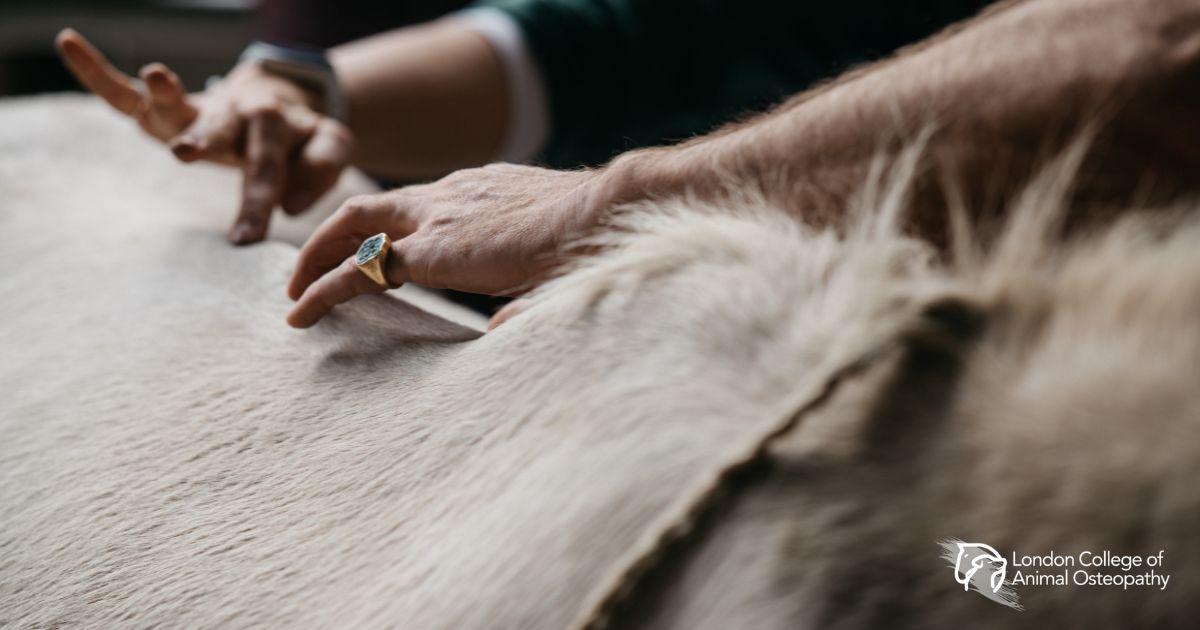
A horse that weaves in its stable, cribs obsessively, or shies at the slightest movement is often labelled simply as 'difficult' or 'nervous'. What is less commonly asked is whether that horse is in pain, and whether the behaviour is a sophisticated survival response rather than a character flaw. In her thesis submitted to the London College of Animal Osteopathy, Emily Ethier examines the physiological underpinnings of equine anxiety and makes a carefully reasoned argument for osteopathic manual therapy as a meaningful part of its management. Ethier opens by drawing a clear parallel between human and equine anxiety disorders, noting that both share roots in the activation of the sympathetic nervous system and the limbic system's pain-response pathways. In horses — prey animals hardwired for flight — anxiety is not merely a psychological inconvenience; it is a physiological state with real consequences for musculoskeletal health. A horse in a near-constant state of hypervigilance will develop chronic tension through the topline and cervical spine, disrupted sleep, reduced blood flow to the viscera, and, over time, a nervous system that interprets innocuous stimuli as genuine threats. The mechanisms behind these changes are explored in depth. Repetitive stress or pain causes specific nerve pathways to become the path of least resistance — a process of central sensitisation that makes the horse increasingly reactive even after the original stimulus is removed. Stereotypic behaviours such as weaving and stall pacing are not simply bad habits; each generates its own pattern of compensatory musculoskeletal tension that, if left unaddressed, will affect the rest of the horse's body through fascial and myofascial connections. Ethier draws on a systematic review by Rechberger, Biberschick, and Porthun published in the European Journal of Medical Research to provide evidence that osteopathic manual therapy — including HVLA techniques, cranial osteopathy, and joint mobilisation — produces measurable changes in autonomic nervous system function in humans. High-velocity low-amplitude cervical techniques showed increased parasympathetic activity, while the CV4 cranial technique demonstrated direct influence on parasympathetic tone. Since the mechanisms are shared across mammalian species, Ethier argues that these findings are relevant to the horse. By alleviating joint restrictions, resetting aberrant nerve pathway signalling, and helping the body move toward homeostasis, osteopathic treatment can reduce the physical amplifiers of anxiety and create the neurological conditions in which a calmer, more settled horse becomes possible. Ethier is careful to position the osteopath not just as a hands-on therapist but as an advocate for the whole animal — one who assesses the horse's environment, training practices, social needs, and management conditions alongside its musculoskeletal status. Anxiety rarely has a single cause, and treatment rarely has a single answer. What this thoughtful thesis makes clear is that osteopathy has a meaningful role to play in the conversation.
.svg.png)


.jpg)

.png)


.png)
.png)
