

Every year, Osteopathy Awareness Month offers a moment to pause and look more closely at a profession that often works quietly in the background. It’s not always the first therapy people think of, yet for many, it becomes the one they rely on most.
Osteopathy sits at an interesting intersection. It blends anatomy, biomechanics, neurology, and hands-on clinical skill into something that feels both precise and intuitive. And while awareness has grown over the years, there’s still a gap between what osteopathy actually is—and what people think it is.
This month is about closing that gap.
So, what is osteopathy really?
At its core, osteopathy is a system of manual healthcare that focuses on how the body’s structure influences its function. That sounds simple, but it carries weight.
Osteopaths are trained to assess and treat the body as an integrated whole. Rather than isolating a single symptom, they look at how different systems interact. Muscles, joints, fascia, circulation, and the nervous system all play a role.
Treatment is hands-on. Techniques can include soft tissue work, joint articulation, mobilisation, and sometimes more subtle approaches depending on the practitioner’s training. The aim isn’t just to reduce pain, but to improve movement, restore balance, and support the body’s ability to regulate and adapt.
Importantly, osteopathy is recognised and regulated in many countries. In places like the UK, human osteopaths must complete accredited training and are registered professionals. That level of regulation reflects the depth of education behind the practice.
More than just backs and necks
One of the biggest misconceptions is that osteopathy is only for back pain. It’s understandable—musculoskeletal issues are a major part of what osteopaths treat.
But the scope is broader.
People seek osteopathic care for a wide range of concerns. Persistent tension, reduced mobility, postural strain, headaches, and recovery after injury are all common reasons. Some also explore osteopathy as part of a wider approach to managing chronic conditions, where improving movement and reducing physical stress can have knock-on effects elsewhere in the body.
There’s growing research supporting osteopathic care for certain musculoskeletal conditions, particularly low back pain. Clinical guidelines in several countries now include manual therapy as part of a multidisciplinary approach for managing these issues.
That said, good osteopathy is not about claiming to treat everything. It’s about understanding when it’s appropriate—and when it’s not. Responsible practitioners work within their scope and refer when needed.
The whole-body perspective
What often draws people to osteopathy, and keeps them coming back, is the sense that they’re being looked at as a whole person.
A shoulder issue, for example, might not be treated in isolation. An osteopath may assess how the spine is moving, how the ribcage is functioning, or whether there are compensations elsewhere in the body. The idea is that the site of pain isn’t always the source of the problem.
This approach is rooted in a few key principles. The body is interconnected. It has self-regulating mechanisms. And structure and function are closely linked.
These principles aren’t abstract—they guide clinical reasoning every day.
A growing role in animal care
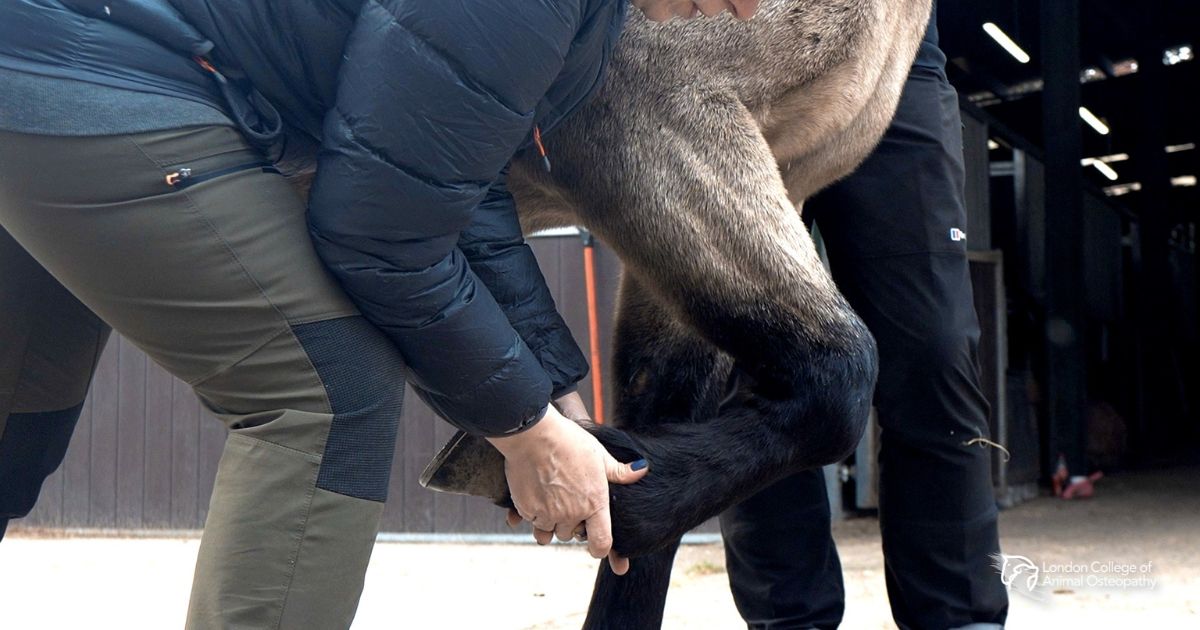
Osteopathy isn’t limited to humans. Over the past two decades, it has gained traction in veterinary and animal care settings, particularly for horses and dogs.
The principles are the same, but the application is adapted. Practitioners assess movement, symmetry, and tissue quality, often working alongside vets and other professionals. In animals, subtle changes in movement or behaviour can signal underlying discomfort long before obvious lameness appears.
For professionals interested in expanding into this area, structured education is essential. Training pathways are designed to build on existing knowledge and develop the specific skills needed for safe, effective practice. If you’re curious about how this works in practice, you can explore London College of Animal Osteopathy’s (LCAO) available programmes here
Why awareness still matters
Despite its long history, osteopathy is still misunderstood in many circles. Some people confuse it with chiropractic care. Others assume it’s simply massage. And many have never heard of it at all.
That lack of clarity can prevent people from seeking care that might genuinely help them.
Osteopathy Awareness Month is an opportunity to shift that. Not through hype or exaggerated claims, but through clear, honest information.
It’s also a chance to highlight the professionalism within the field. Modern osteopaths are trained in anatomy, physiology, pathology, and clinical assessment. They are taught to recognise red flags, to understand contraindications, and to work safely within a healthcare framework.
This is especially important in an era where misinformation around health spreads easily.
The patient experience
One of the most consistent pieces of feedback from patients is how different an osteopathic consultation feels.
There’s often more time spent on assessment. More hands-on evaluation. More explanation.
Patients are usually encouraged to be active participants in their care, whether that means making small changes to movement habits, understanding how their body responds to stress, or simply becoming more aware of how they move through daily life.
This collaborative approach can be as valuable as the treatment itself.
Looking ahead
Osteopathy continues to evolve. Research is expanding. Education is becoming more structured and internationally recognised. And the integration with other healthcare disciplines is improving.
At the same time, the core of osteopathy remains unchanged. It’s still about skilled hands, clinical reasoning, and a deep understanding of the body.
For those already in the field, Osteopathy Awareness Month is a reminder of why the work matters. For those new to it, it’s an invitation to look a little closer.
Visit the following blog if you want to explore more about a career in equine or canine osteopathy.
A final thought
Awareness isn’t just about visibility. It’s about understanding.
Osteopathy doesn’t need to be overcomplicated or oversold. When practiced well, its value is clear in the outcomes it supports and the experiences it creates.
Sometimes, the most impactful healthcare is the kind that helps the body do what it’s already trying to do—just a little more effectively.
And that’s a message worth sharing.


.png)
.png)
