

Click to view
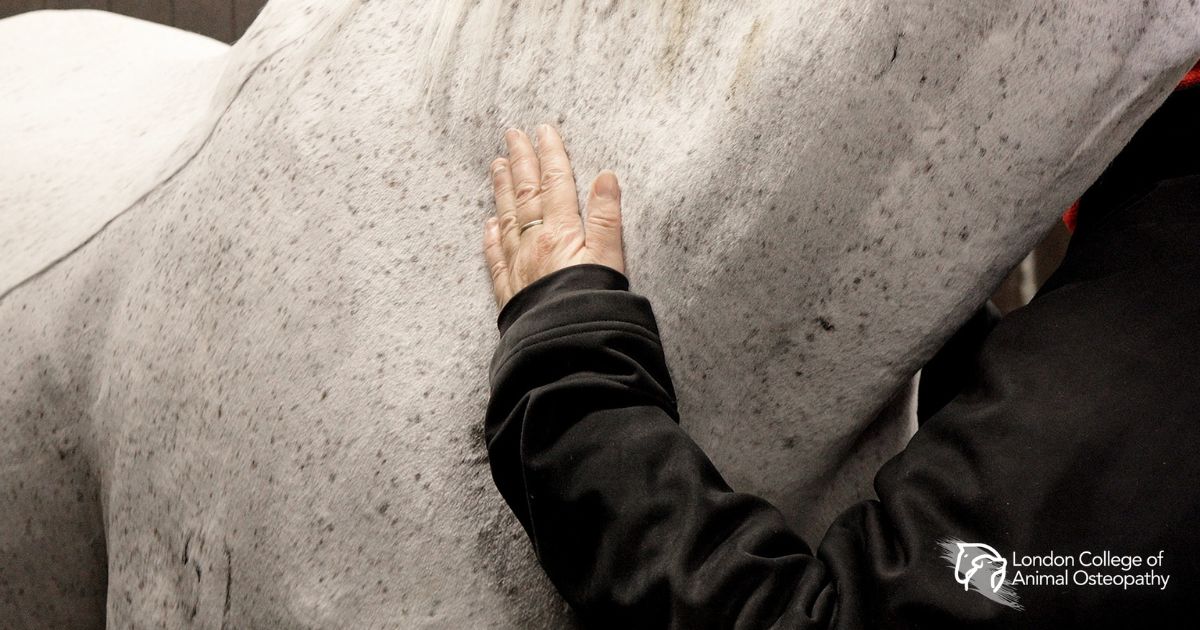
Every horse carries its physical history in its body. The old falls, the awkward landings, the years spent compensating for an undiagnosed restriction — these experiences accumulate as somatic dysfunctions that quietly shape how a horse handles, moves, and responds under saddle. In this practical and perceptive thesis, Bethany Rice — drawing on more than a decade as a full-time professional trainer before qualifying as an animal osteopath — explores the physical roots of some of the most common and frustrating problems in horses. The thesis is structured around three categories: handling issues, behavioural problems, and performance limitations. For each, Rice identifies the likely anatomical origins, walks through the clinical reasoning, and outlines an osteopathic treatment approach. Head shyness is traced to atlanto-occipital dysfunction and compression of the poll nerves. Resistance during farriery maps to joint pain, brachial plexus nerve impingement, or sacral and lumbar lesions, depending on which limb is involved. Girthiness reliably points to rib head and thoracic vertebral dysfunction at segments T8-T12. Bucking at canter, a behaviour often managed through training alone, is reframed here as a probable expression of sacral or lumbar neuralgia that worsens as the horse transitions to a different gait. Performance limitations receive equally detailed treatment. Bit resistance is examined through the lens of the atlanto-occipital joint, C2 dysfunction, and the hyoid apparatus. Preferred bend patterns are categorised as Type 1 or Type 2 lesions — each with a distinct presentation, origin, and treatment pathway. The concept of diagonal synchrony is used to explain why a restriction in one limb produces a corresponding reduction in the contralateral diagonal. Throughout, Rice makes a clear and compelling argument: that what trainers often interpret as stubbornness or training failure is often the body communicating a need for restoration rather than correction.
.svg.png)




.jpg)





.png)


.png)
.png)
