

Click to view
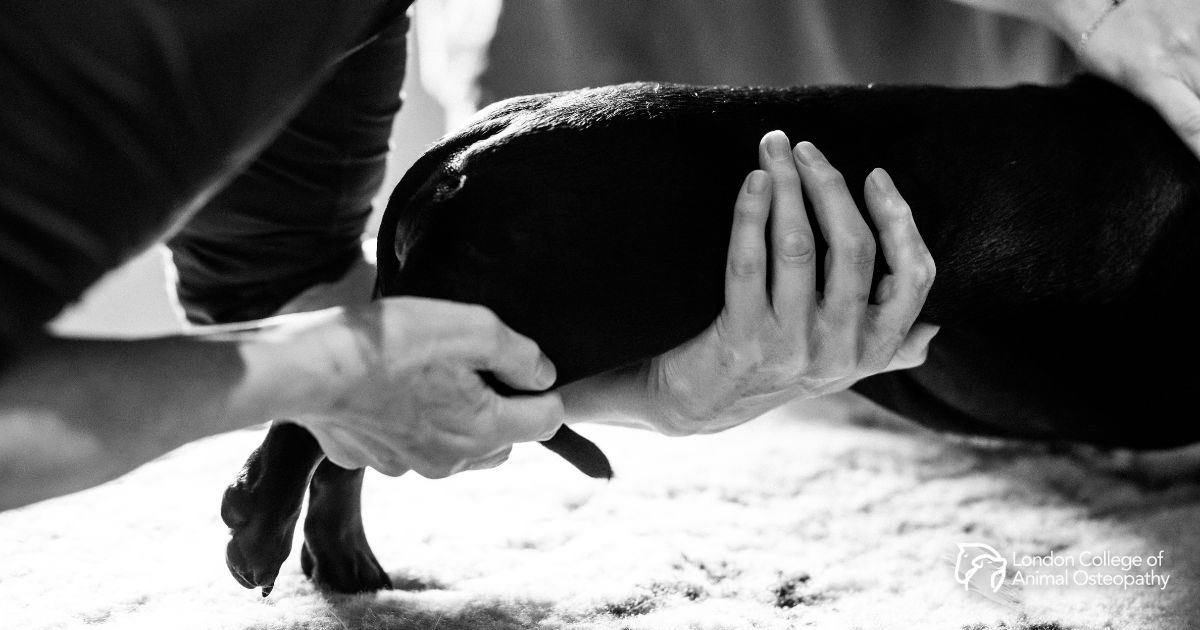
Few orthopaedic diagnoses carry as much weight in a consultation room as a ruptured cruciate ligament. For dog owners, the news typically arrives alongside a cascade of difficult decisions: surgery or conservative management, cost versus outcome, weeks of restricted movement, and the looming certainty that arthritis will follow regardless of the path chosen. It is that last point — the inevitability of joint degeneration — that sits at the centre of this thesis. The author draws on clinical experience in swim and laser therapy alongside a thorough review of the literature to argue that osteopathy is not merely a useful add-on to cruciate rehabilitation, but a necessary component of it. The canine stifle is explored in detail: its anatomy, the mechanics of ligament failure, and the downstream consequences of instability. What emerges is a picture of an injury whose effects ripple far beyond the knee itself. As the dog compensates for the damaged limb, weight shifts to the opposing leg, the spine absorbs altered loading patterns, and the front limbs carry disproportionate strain. Studies reviewed in the thesis suggest that approximately 50% of dogs will rupture the cruciate in their second knee within five and a half months of the original injury — a sobering statistic that reframes the argument for whole-body treatment. Surgery is assessed evenhandedly. TPLO remains the gold standard in terms of outcome, though all surgical options are shown to slow rather than prevent arthritic development. Conservative management has a place, particularly in smaller breeds, but the thesis is clear that without structural support for the altered gait, arthritis progresses more aggressively. Braces, meanwhile, are given particular scrutiny: a 2016 JAVMA survey is cited showing higher complication rates and lower owner satisfaction compared to surgical repair, alongside the paradox that braces undermine the very muscle function they appear to support. Osteopathic articular balancing and functional technique are presented as the means by which the body can be coaxed back toward symmetry — reducing swelling, restoring range of motion, addressing compensatory dysfunctions, and maintaining proprioceptive awareness throughout recovery and beyond. This is a thesis that treats the dog, not just the knee.
.svg.png)









.png)
.png)
