

Click to view
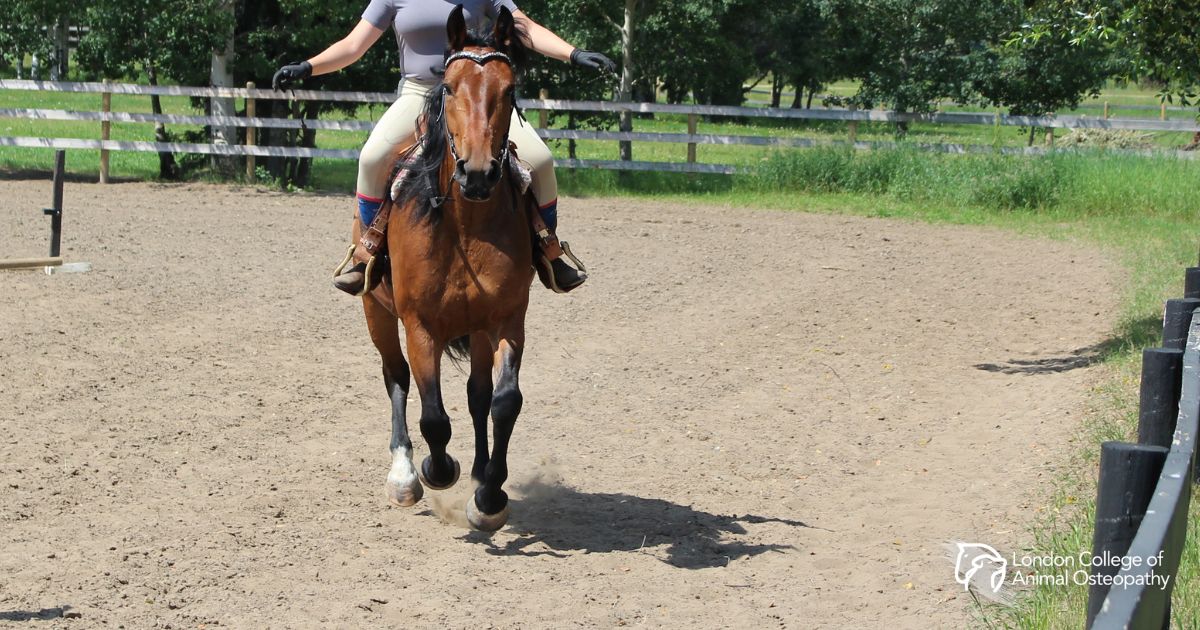
When a horse resists the aids, tosses its head, or suddenly loses rhythm through a transition, the instinct is often to look at the training. But what if the problem isn't in the schooling — what if it's in the body? This is the central question explored in Anne Éfféré's thoughtful and well-structured thesis, which makes a compelling case that many of the most common riding problems are not behavioural in origin, but physical — and that equine osteopathy offers a meaningful path to resolving them. Drawing on current research and established osteopathic principles, Éfféré systematically maps the links between specific physical dysfunctions — including musculoskeletal imbalances, joint restrictions in the sacroiliac and cervical spine, and compensatory movement patterns — and the riding problems they cause. A horse labelled stubborn for refusing to bend may simply have cervical spine restrictions. A horse that bucks during transitions may be communicating discomfort in the sacroiliac region. Without understanding the physical root cause, training corrections not only fail to resolve the problem — they can make it worse. The thesis also introduces key osteopathic techniques, including structural mobilisation, soft tissue manipulation, Osteopathic Articular Balancing (OAB), and craniosacral therapy, exploring how each addresses specific dysfunctions. Importantly, Éfféré emphasises that osteopathy works best as part of a collaborative approach — one that brings together the practitioner, trainer, and rider to observe, respond, and adapt. A valuable read for anyone working with horses who don't quite feel right under saddle.


.jpg)

.png)


.png)
.png)
