
Click to view
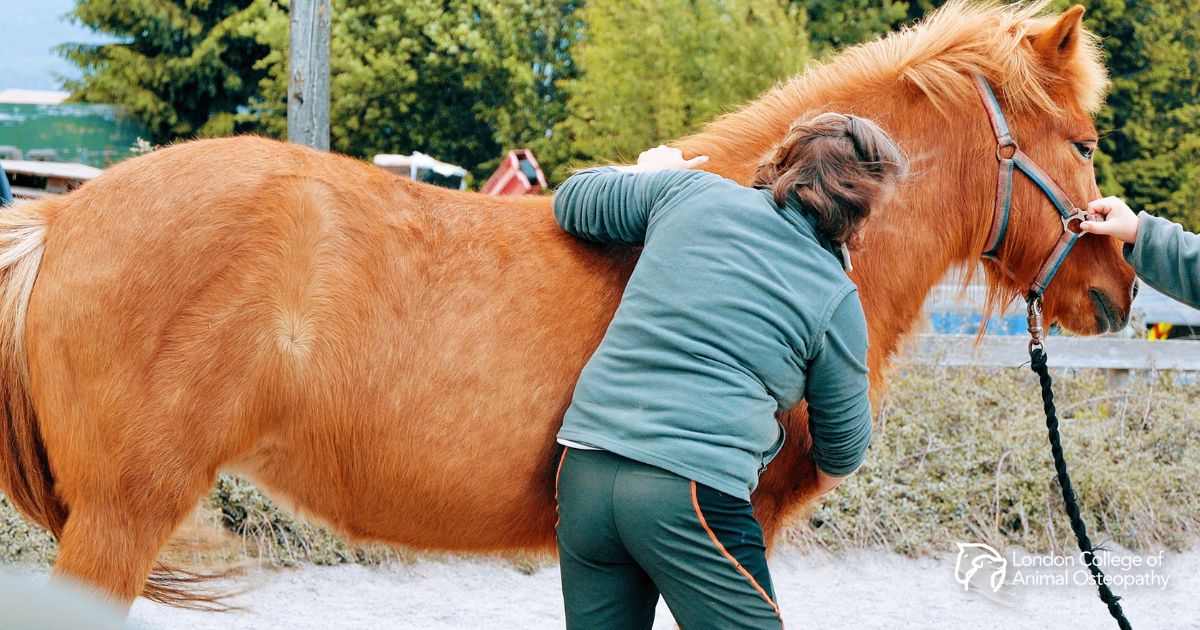
Every horse carries the weight of its thorax suspended not from bone, but from muscle. Unlike humans, horses have no clavicle — the forelimb attaches to the trunk entirely through a system of muscular and fascial connections known as the thoracic sling. That single anatomical fact has profound consequences for how horses move, how they bear weight, and how they break down when something in that system fails. This thesis examines the thoracic sling from anatomy through to clinical application — tracing the roles of the Trapezius, Rhomboideus, Serratus Ventralis, Subclavis, Lattissimus Dorsi, Omotransversarius and the three Pectoral muscles, and explaining how together they form a dynamic ring of support around the cranial thorax. When this system is well-conditioned, the horse is balanced, fluid, and capable. When it is compromised, the signs are wide-ranging: difficulty on circles, sensitivity in the girth region, hollow posture under saddle, shortened stride, cross-cantering, and loss of hind engagement. A significant portion of the thesis is devoted to the two equine somatic dysfunction patterns — Type 1 and Type 2 — and how both directly implicate the thoracic sling. The Type 2 pattern, involving the accessory nerve and its downstream effects on the Trapezius and Brachiocephalicus, is explored in particular detail. The author then walks through a worked clinical example — a forelimb over-abduction injury — demonstrating how an osteopath would move from static observation and gait analysis through to hands-on treatment, rehabilitation prescription, and home care guidance. It is a clear and practical illustration of how OMT addresses not just the presenting injury but the compensatory patterns it creates throughout the body.


.jpg)

.png)


.png)
.png)
