
Click to view
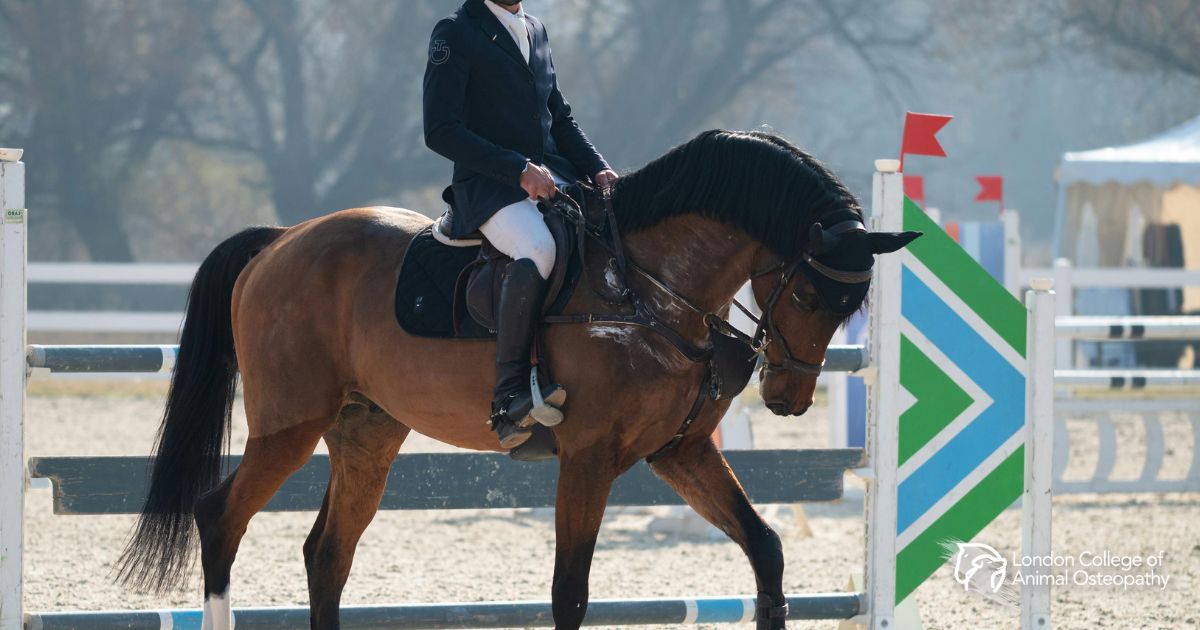
Walk into almost any equestrian yard and you will find horses on regular bodywork schedules and riders who have never considered booking a session for themselves. That imbalance sits at the heart of Katie McRory's research. As a Craniosacral Therapist, Registered Massage Therapist and manual osteopathic practitioner, she noticed that only around ten percent of the riders in her practice received regular bodywork — and set out to understand what that gap might cost the horse. The study assessed eight horse-and-rider pairs over a four-to-six week period. Riders were evaluated for postural and tissue restrictions while standing and in a supine position. Horses were assessed osteopathically, in free movement, under saddle with their own rider, and then again under saddle with an experienced professional — the latter providing an independent baseline against which rider-specific effects could be measured. The results are striking in their consistency. Seven of the eight riders weighted the right side of their horse more heavily than the left. Patterns of restriction in the horse — across the shoulder, spine, hip, neck, poll and TMJ — aligned predictably with the specific dysfunction present in the rider. A hip restriction in the rider correlated with increased load on the corresponding side of the horse; a twist through the rider's torso produced a recognisable signature in the horse's lateral bend and shoulder mobility. McRory develops a series of dysfunction statements from the data, grounded in the physics of load and torque and supported by Freyette's Laws of spinal motion. The professional rider's horse, notably, showed the least dysfunction of any pair in the study — demonstrating that skill and balance in the saddle can substantially offset the effects. The conclusion is unambiguous: treating the horse while the rider's dysfunction remains unaddressed is, at best, a maintenance strategy. For resolution, both partners need care. The data points clearly in that direction, and the thesis makes a compelling case for expanding the conversation around equine health to include the person on top.


.jpg)


.png)


.png)
.png)
