

Understand hoof anatomy and morphology
Assess hoof balance using objective, measurable criteria
Recognize the systemic impact of hoof dysfunction
Apply Hoof Mapp analysis in clinical practice
Integrate hoof assessment into treatment planning
Identify nutritional factors influencing hoof health
Apply appropriate manual therapy techniques to the distal limb


Registered Osteopath (Human & Animal), UK
In addition to the learning content, students receive direct access and support from their instructors on course material and related questions.


Self-paced learning with no deadlines
Instructor support and guidance
Continuing education credits
Certificate of Completion
Lifetime access to course updates
Free online textbooks & reading materials

LCAO is a leading provider of comprehensive, globally accessible training in Equine and Canine osteopathy geared toward the veterinary, osteopathic, and animal healthcare community.
Expand your knowledge and skillset towards the benefit of animals.
Diversify your knowledge with holistic practices.
Build a broader set of tools in your practice.
If you have any outstanding questions about our programs or courses, you can get in touch with our student support team for a free consultation.
Some of the common FAQs we cover in these consultations include:
We look forward to helping you develop your career in animal osteopathy.

Listen to Juan's experience learning Equine and Canine Osteopathy at LCAO during Masterclass 2023 in Skien, Norway.
From human to animal osteopathy: Marina´s journey towards becoming a canine osteopath.
Listen to Karen's experience learning Equine and Canine Osteopathy at LCAO during Masterclass 2024 in Lymm, UK.
Listen to Leslie's experience learning Equine Osteopathy at LCAO.
Rosemary Leslie, DVM/VMD, and graduate of the Canine Osteopathy program discusses her experience at LCAO.
Meet Prof. Stuart McGregor and learn about his unique osteopathic approach.
"In our treatment, there is something we call ‘intent'. This is where we apply the techniques intending to enable healing. We imagine ourselves inside the tissues being treated and then bring about positive change."
- Prof. Stuart McGregor, DO, Animal Osteopath, UK
"One of the main principles in osteopathic medicine is that treatment should restore health to the local tissues. This involves the restoration of blood supply, nerve supply, and lymphatic drainage. Where any of these are absent, the tissues can only be in poor health."
- Prof. Stuart McGregor, DO, Animal Osteopath, UK
"Osteopathic techniques are safe and non-controversial in their nature and actually work better on animals than they do on humans. This is entirely down to the better biomechanics of the pronograde four-legged posture. Animals do not collapse in their structure in the same way as humans. It is therefore much easier to correct the structure of an animal than it is of a human."
- Prof. Stuart McGregor, DO, Animal Osteopath, UK
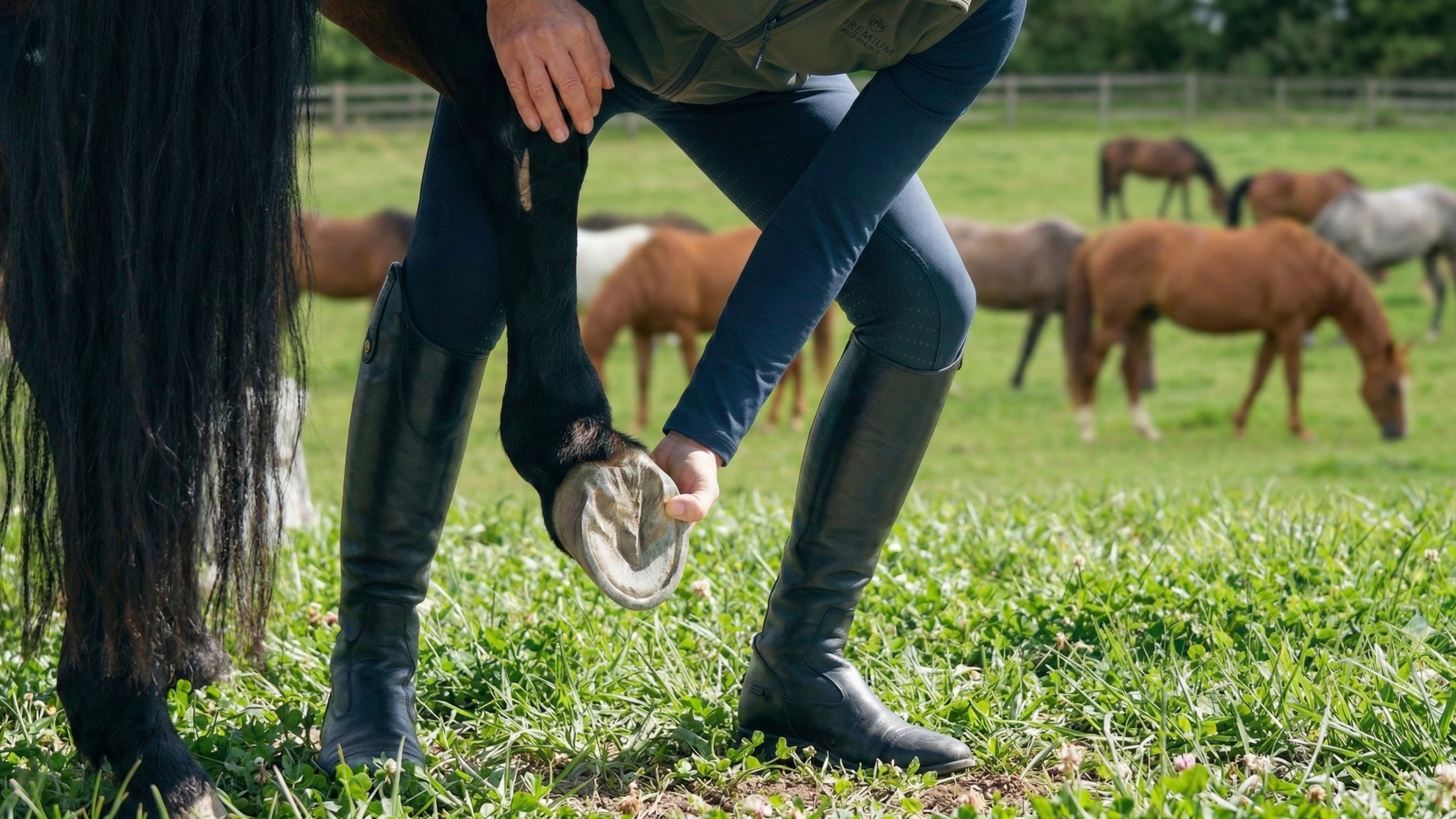
Hoof and the Manual Therapist is designed for:
Equine manual therapists, Osteopaths, Physiotherapists, Chiropractors, Veterinary professionals, Equine bodyworkers and rehabilitation specialists.
This course is ideal for professionals seeking a deeper understanding of hoof biomechanics and its systemic effects, without performing hoof trimming or shoeing.
The curriculum is divided into four modules:
Graduates receive a Certificate in Hoof and the Manual Therapist, recognizing their ability to assess hoof function and identify when hoof morphology may be contributing to clinical findings. This certificate supports manual therapists in enhancing clinical outcomes through informed, interdisciplinary decision-making.
Both modules are delivered v LCAO´s eLearning platform, powered by Moodle software. Online studies are entirely self-paced: there is no set due date to finish it. Moreover, LCAO students and graduates retain lifetime access to all online courses and future updates.
MASTERCLASS Hands-on Clinical Training / Elective

Understand hoof anatomy and morphology
Assess hoof balance using objective, measurable criteria
Recognize the systemic impact of hoof dysfunction
Apply Hoof Mapp analysis in clinical practice
Integrate hoof assessment into treatment planning
Apply appropriate manual therapy techniques to the distal limb
"Stuart’s expertise and passion for the subject of animal osteopathy is indisputable and his ability to impart his knowledge to the dedicated learner is second to none. I have been using his techniques to treat animals with great success for 16 years and have built a highly successful practice."

"I'm really enjoying the content and the way you present the information in the video lectures. Everything is very logically explained, making it easier to learn and making me look forward to downtime throughout the day where I can sit and go through a lesson. Obviously, there are lessons where I need to go back and review things a few times to truly grasp certain concepts, but the combination of the notes, videos, textbooks, and extra resources makes that possible."
"I have received excellent service and assistance in my studies here! The course content is thorough and high-quality delivery. The practical treatment videos are extremely useful, and the lectures are very well taught. I recommend LCAO courses to anyone wishing to expand their career or start a brand new one. As a lifelong equestrian, this industry is growing and growing every year, so now really is the time to jump in."
"I am absolutely loving the depth, detail, and flow of this course. The site is user-friendly. The content is fantastic, with recorded lessons helping to clarify and explain everything in more detail. I am halfway through the preclinical units and am pretty much obsessed with every spare moment dedicated to logging in and absorbing more knowledge!! I am very much looking forward to the clinical elements and the Masterclass."
"I’m doing some indirect work currently, and these are some horses I was asked to try to help. Yes, the method you have shown has done wonders helping me analyze with much more organization. This school has been awesome! Thank you for your time."
"I am a new student. Just logged in after receiving access to the studies.
I browsed around the modules and courses and could not be happier with joining in. Thank you and wish me best fortune with the courses!"
“Easy to use learning platform and excellent treatment videos. Prof.McGregor is a fantastic teacher and mentor. The really good program.”
“I have just completed the preclinical module for the Canine stream of the Diploma in Animal Osteopathy program. The content of each course is deep, thorough and engaging. Each module takes you on an investigative journey that inspires and educates. I very much look forward to the Equine segment.”


“ An intimate knowledge of anatomy, physiology and musculoskeletal pathology is essential. Once learned, we don’t forget it because we keep it in mind every time we touch a dog or pick up a horse’s foot.“
- Prof. Stuart McGregor, DO, Animal Osteopath, UK
Firstly, the program will thoroughly review the Systemic Anatomy and Physiology of all body systems. Following that, you will be introduced to the Functional Anatomy course which will cover the structures of axial and appendicular skeletons, biomechanics of canine locomotion, and the functions of muscles, joints, and spinal segments. This will provide you with a better understanding of their relationship to movements.
In the third course, which is centered on canine pathology and diseases, you will delve into over 100 health conditions, including infectious and systemic diseases, as well as tumors. The course will discuss the causes, symptoms, diagnoses, and treatments available for each of these conditions. To obtain additional information about the program, please download the Program Outline provided below.
Understand hoof anatomy and morphology
Understand hoof anatomy and morphology
Assess hoof balance using objective, measurable criteria
Recognize the systemic impact of hoof dysfunction
Apply Hoof Mapp analysis in clinical practice
Integrate hoof assessment into treatment planning
Identify nutritional factors influencing hoof health
Apply appropriate manual therapy techniques to the distal limb
I am a physiotherapist and a kennel owner who took the Canine Health Science Essentials course in order to renew my professional certification. I was worried that I would be bored with the material because of my anatomy background, and I teach dog anatomy as well. That was not the case! I loved the course. I thought it was well organized and had wonderful video resources. I thought that the staff from LCAO was very responsive and helpful. I think this course was better than many continuing education courses that I take for my PT license renewal. I was so impressed with LCAO that I am now thinking of doing their diploma certification in canine osteopathy. I would highly recommend LCAO and the CHSE course.
Kali Larson, Certified Equine Nutritionist and Head of Equine Nutrition Studies, shares insights into what students will learn in LCAO's Equine Nutrition Advisor Certificate Program.
For the Equine Manual Therapist
For the Equine Manual Therapist
"When we understand how nutrition shapes the body from the inside out, we unlock the ability to care for horses in a way that is both scientific and deeply compassionate."
— Kali Larson, Head of Equine Nutrition Studies at LCAO
Welcome to Hoof and the Manual Therapist - a science-based course designed for equine professionals who want to understand how hoof morphology and function influence the whole horse.
A horse’s health and performance are built on a strong structural foundation. While correct hoof balance is essential for soundness, its impact extends far beyond the foot itself. This course explores how hoof morphology, balance, and function affect movement, comfort, and long-term musculoskeletal health.
This course does not train or certify hoof care professionals. Hoof care requires years of specialist education and experience. Instead, this program equips manual therapists with objective, evidence-based tools to assess whether hoof structure and function may be contributing to the clinical issues they are treating. You will learn how to interpret the hoof as a reflection of whole-horse health and integrate hoof assessment into your clinical reasoning.
As the saying goes, “No hoof, no horse.” This course explains why that principle remains fundamental to equine health and performance.
Hoof and the Manual Therapist is designed for:
Equine manual therapists, Osteopaths, Physiotherapists, Chiropractors, Veterinary professionals, Equine bodyworkers and rehabilitation specialists.
This course is ideal for professionals seeking a deeper understanding of hoof biomechanics and its systemic effects, without performing hoof trimming or shoeing.
The curriculum is divided into four modules:
Module 1 - Relevant Anatomy and Impact of Hoof Morphology
Module 2 - Assessing Hoof Balance with Hoof Mapp
Module 3 - Manual Therapy Techniques for the Distal Limb
Module 4 - Nutritional Support for Hoof Health
Jim Hurden, M.Ost, PGCertAO, PGCertACE Registered Osteopath (Human & Animal), UK
Understand hoof anatomy and morphology
Assess hoof balance using objective, measurable criteria
Recognize the systemic impact of hoof dysfunction
Apply Hoof Mapp analysis in clinical practice
Integrate hoof assessment into treatment planning
Identify nutritional factors influencing hoof health
Apply appropriate manual therapy techniques to the distal limb
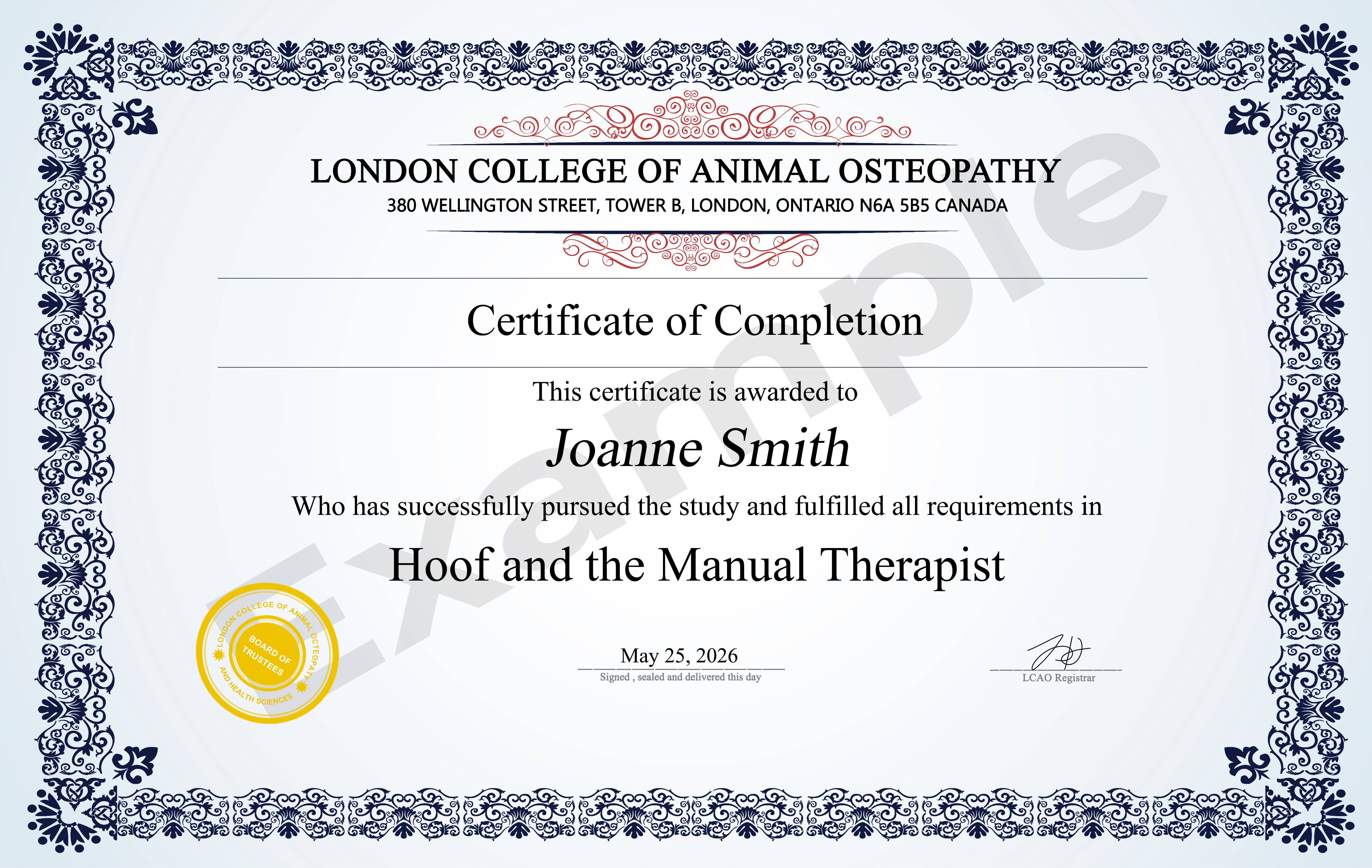
Graduates receive a Certificate in Hoof and the Manual Therapist, recognizing their ability to assess hoof function and identify when hoof morphology may be contributing to clinical findings. This certificate supports manual therapists in enhancing clinical outcomes through informed, interdisciplinary decision-making.
A solid education in equine nutrition is an investment in your career, as well as in the health and future of horses.
We are looking forward to welcoming you to our vibrant community of LCAO students and faculty.
Contact info@animalosteopathycollege.com to enroll in Hoof and the Manual Therapist and strengthen your understanding of equine foundations.


.jpg)


.png)
.png)
